
This site contains a comprehensive collection of documented case files for the Wallace case, including official police records, materials from the defense’s Hector Munro, and contributions from author Jonathan Goodman.
Unlike some other high-profile cases—such as the JonBenét Ramsey murder, which has seen books authored by professional law enforcement agents—no one who has written about the Wallace case possesses comparable expertise. Instead, the authors tend to be armchair detectives, who have the freedom to explore unlikely theories and publish unverified or unreliable information without the constraints of professional accountability. By contrast, professionals in law enforcement or legal fields are held to higher standards of accuracy and rigor.
Understanding the credibility of the source is crucial when evaluating information about the Wallace case or any other complex investigation. Readers often take the written word at face value, especially in books, without considering whether the author might omit or distort facts to craft a more compelling narrative. Verifying an author’s qualifications, motivations, and adherence to evidence-based analysis is essential for gaining an accurate understanding of any case.
Authors on this case include:
Antony M. Brown

Fiction writer Antony M. Brown.
Antony M. Brown is a philosopher and fiction writer with an interest in mathematics. He authored the “Cold Case Jury” series, where he outlines various theories before providing his own thoughts, and invites readers to vote on his site, as though serving on a jury. However, Brown later admitted the jury polls were not as genuine as believed as they now rely on entries he manually inputs from emails, because maintaining a functional online poll became too costly.
While the blend of fact and fiction can create a compelling narrative, the dialogue is often straight out of a soap opera, rather than being based on historically accurate accounts. This introduces a lot of confusion, as the reader is left in the dark as to what elements are real and what elements were fictionalised by the author. As such, the works should be considered fiction first and foremost, as are the many other fiction works based on real events (various movies, fiction books, and so on, employ this interesting concept with great success).
However, the books, such as the one on the Wallace case titled “Move to Murder”, have tantalized many readers across the country, with many praising his works as excellent bedside books, or good Christmas gifts for cheap thrills.

Rod Stringer waves to the camera.
Stringer’s own credentials are harder to find. Brown suggests he is a businessman, but I have not been able to find any Rod (or Rodney) Stringer in any Companies House records and cannot find any evidence of his business, education, or any record of any employment, even historically, and he is found to still be living in his mother’s home.
In terms of legal experience, although he is not a legal professional, he has experience being engaged in lawsuits. He took legal action in his early 30s after a man in his 60s, “Kentigern Smith”, beat him up mercilessly for reporting their shared club for serving liquor inappropriately.
Other books penned by Brown include “The Shark Arm Mystery” and the “Crime & Mystery Hour” series.
Antony M. Brown:
Years of law enforcement experience: 0.
Years of legal experience: 0.
Rod Stringer:
Years of law enforcement experience: 0.
Years of legal experience: 0 (or some as a litigant).
John Gannon

Professional fiction writer John Gannon.
John Gannon is a full time professional fiction writer with a BSc in Earth Science and a Master’s degree in screenwriting, winning the Lynda La Plante Screenwriting Award in 2006. His book on the Wallace case is extremely in-depth, but largely speculative, and makes many leaps of faith, such as suggesting the pension age Julia was in fact paying Gordon and Marsden to have sex with her, and that Wallace enticed them to murder her in exchange for him not telling the general public about their double lives as rent boys.
Gannon claims that Julia would hide money up her skirt for the young men to hunt for when they serviced her, with Wallace’s blessing. He suggests that Marsden killed Julia while having sex with her on the couch and provides some dubious scientific claims interpreted by himself, such as claiming the state of digestion in the body proves she was killed after 7.00 PM on the night of the killing.
One book review comes from an acquaintance of Kenneth Caird, who writes of the book:
If you’re not into fiction you should skip this book. It’s possible that it’s just a spoof — I can’t decide — but if it’s serious then it’s one of the weirdest pieces I’ve ever come across not only because of its conclusion but in its style wherein the author seems to be moving toward one thing only to double-back somewhere else. I know Agatha Christie did that but she was a professional tease, not a documentarian.
My ex-boss Kenneth Campbell Caird, who I worked for in the 1960s is a minor player in the book from which I learned that he died in 1988. Well one good thing about that is he never lived to read this lulu of a story — I think he would have been outraged.
Over the years the consensus that has developed about this saga is that the murderer was a Richard Gordon Parry, however this book says it was someone else with Parry and Wallace in cahoots as abettors. It’s possible that it WAS someone else but in order to believe that you have to swallow two unswallowable assertions given in this account.
We have to believe that frumpy Julia Wallace, who the author says was 70 years old not 53, was also a cougar who paid men in their 20s for sex! Yes, you heard me.. That titbit would be a bit of a stretch even in our jaded age where everything goes but in depression-era Liverpool of 1931 when money was short and promiscuous old housewives had barely been invented, Julia, who probably wasn’t that good-looking even when she was 20, was at 70 supposedly sewing money into her woolies and bringing youngsters in to look for it and service her at the same time while her cuckolded spouse was out collecting premiums to finance it all. Still with me? Good, it gets worse — or better.
Does anything or anyone back the author up on this left-field tangent about such goings on? Was 29 Wolverton Street really a bordello? Yes — one person, and only one person, actually does testify to this view — none other than Parry himself! Well then it must be true. You could take his word to the bank that the Wallace’s were sexually odd — Parry has good references for veracity a mile long doesn’t he, slightly shorter than his rap sheet.
The other thing you need to accept to keep the plot going is that Wallace was sick of his wife and wanted her dead so that”he could be free”. Really? Free to do what? The fact is that he does eventually get free of her doesn’t he? And he does what — take a world cruise with her non-existent life insurance pay-out, or date some young hookers (under 70 of course), or go on a few African safaris maybe? No — actually he dies a sick and broken man two years later having been forced out of Wolverton Street by the replete hostility he faces from a public not interested in due process. This puzzling yearning on the part of Wallace to reclaim his singular freedom as posited by the author is ok — except maybe for reality. Neighbors, who had observed the couple for years close by, relatives, friends, work associates, chess associates, et al were unanimous that this was a devoted couple — so who do you believe a hundred intimate observers or Parry, who not only has a dog in the race but even on his best days is about as honest as Pinnochio in a bad mood. The fact is that Wallace did nothing and went nowhere after his wife’s death, and spent his final two years of unwanted freedom writing heartfelt reminiscences about how he missed Julia. Yep — you can’t tie a good man down.
The long litany of facts and observations about the Wallace’s devotion were all wrong apparently. Now here we have the real backdrop of, not a successful, monogamous pairing but, according to this writer, a dysfunctional, scandalous imbroglio in which Mrs. Wallaces beds guys fifty years her junior, pays them well from her pathetic husband’s scant earnings, all the while with the neighbours fooled into thinking that they’re living for years next to Darby and Joan.
Wallace does the only thing a real man like him can do and blackmails one of Julia’s gigolos into killing her, otherwise Wallace threatens to tell on him and ruin his future prospects with his wealthy betrothed. So the philandering whippersnapper got the wages of sin that were coming to him as he is forced with great reluctance to beat his old squeeze to death. Of course, one is forced to ask why he didn’t just beat Wallace to death, thus doing away with the blackmail threat and still keeping his stolen Julia fruit — but one could ask a thousand inconvenient questions about this tortured plot, such as why there are no commendations from famous readers on the back cover. Maybe they’re all still wincing.
Half way through the book my credulity had been stretched far beyond breaking point but I finished it thinking that the author lost his way. He should be writing melodramas not documentaries, but at least I found out what happened to my ex-boss. That part was worth the money. RIP
Other works by Gannon include “The lives of three rhinoceroses exhibited in London 1790–1814”. He has also contributed in regards to providing important documents of evidence for this site.
Years of law enforcement experience: 0.
Years of legal experience: 0.
James Murphy

Fiction writer James Murphy.
James Murphy is a fiction writer, noted for writing a trilogy of cold war spy thrillers. He wrote a book on the Wallace case which uncovered some new facts (it was written after the case files were released to the public), but also included elements of fiction and pseudoscience such as the claim that Gordon cannot be guilty because he was left-handed, neither claim of which is supported by science, or any known fact about Gordon.
Other books he has written include a translation of Adolf Hitler’s “Mein Kampf”, and “The Microscopic Bugs that Live in Your Eyebrows”.
Years of law enforcement experience: 0.
Years of legal experience: 0.
Tom Slemen
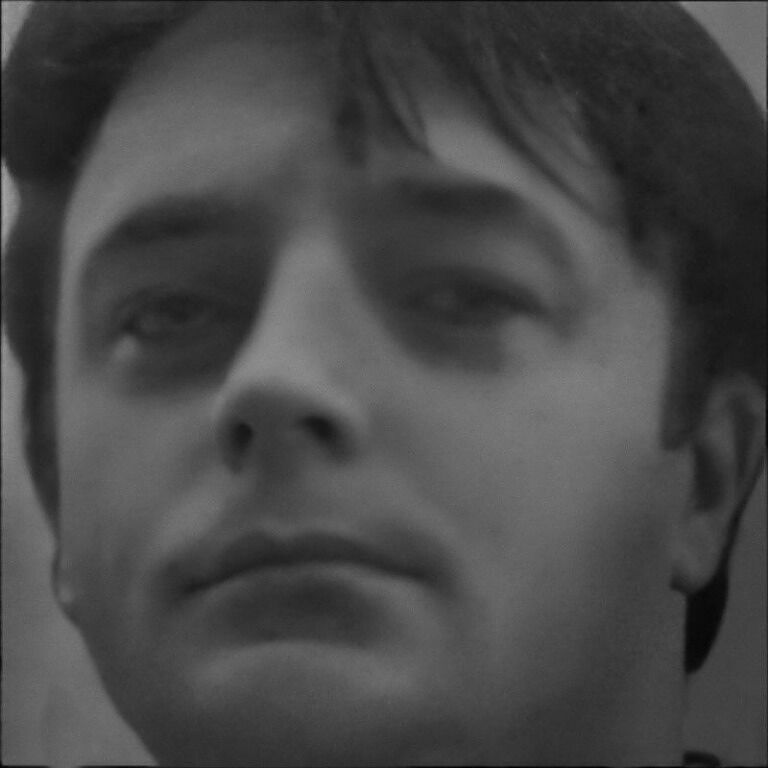
Ghost hunter Tom Slemen.
Popular writer Tom Slemen has penned a great number of books about ghosts, aliens, and paranormal entities at large.
Tom claims he made contact with an entity referring to himself as “Stan”, who transmitted to him through the radiowaves that the neighbour, John Sharpe Johnston, had confessed to killing Julia during a huge plot involving the Wallace’s pet cat “Puss”.
Tom’s work includes columns such as “Stalked by a UFO” and “The truth about demons that live in our homes”, as well as books like the popular “Haunted Liverpool” anthology.
Years of law enforcement experience: 0.
Years of legal experience: 0.
Dorothy L. Sayers
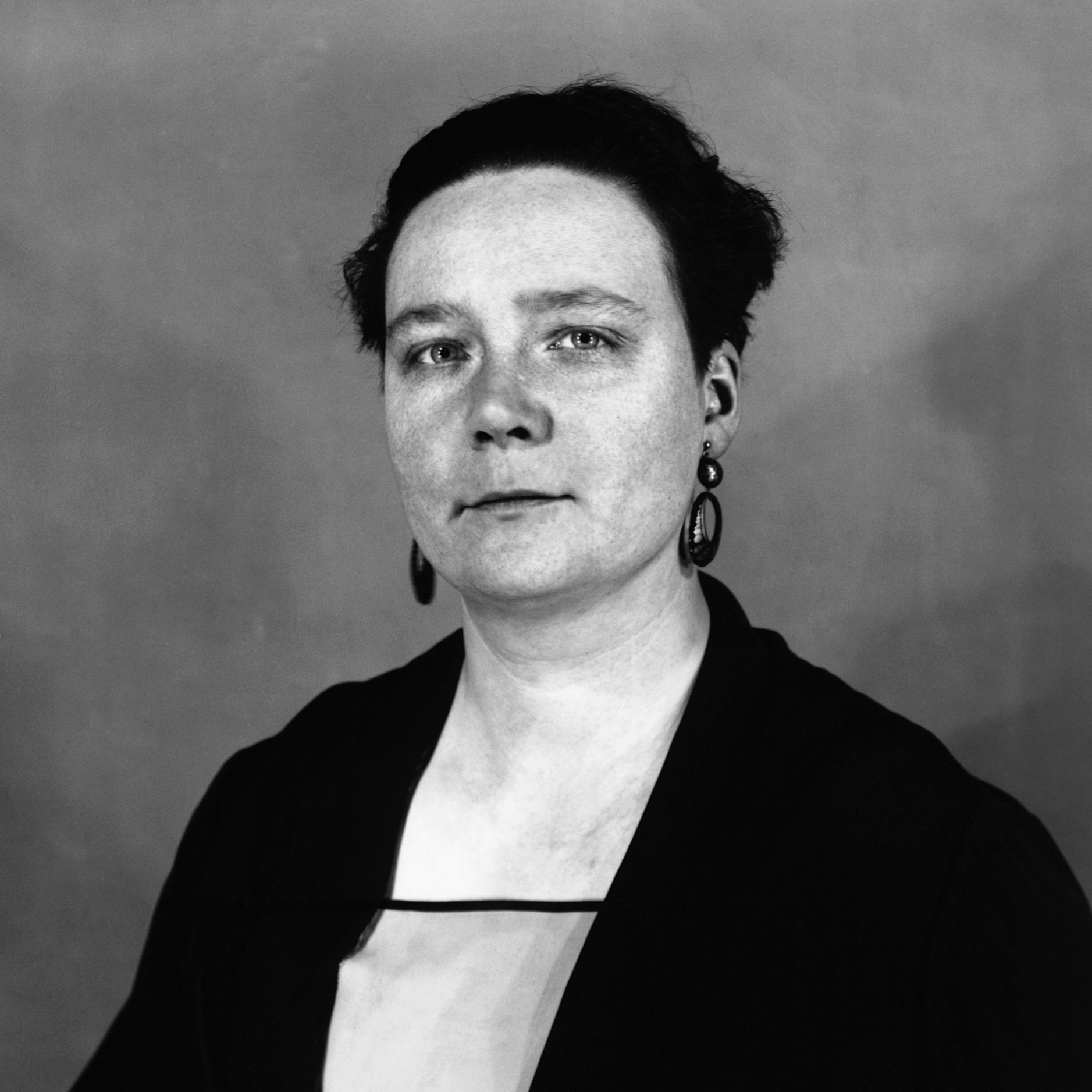
Fiction writer Dorothy L. Sayers.
Being a fiction writer is likely what attracted her to the case’s fantastical elements. She spends a lot of time musing about the state of the locks in the house.
Years of law enforcement experience: 0.
Years of legal experience: 0.
Edgar Lustgarten
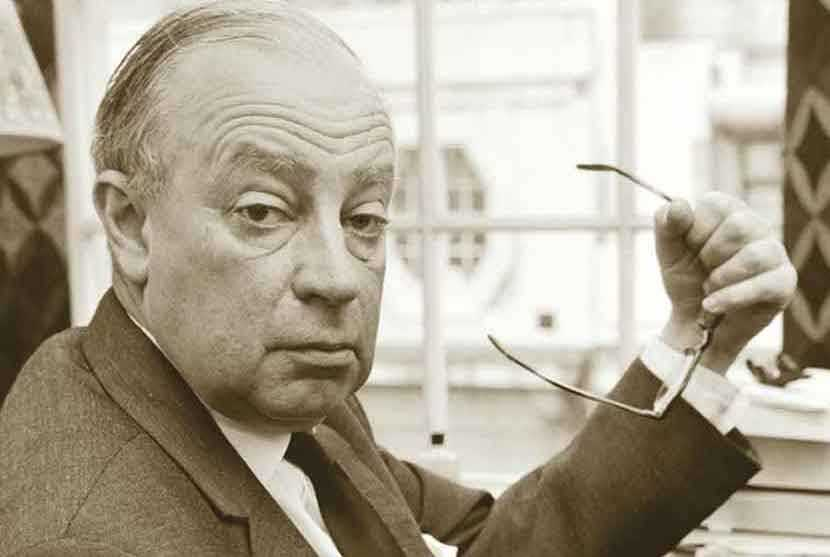
Edgar Lustgarten, professional barrister for a number of years.
Crime writer Edgar Lustgarten practiced as a barrister for about 10 years, beginning around 1930. His legal background informed his analysis of the Wallace case in “Verdict in Dispute” (1950). He later branched out into detective fiction writing.
While his insights into evidence and legal proceedings add credibility to his ability to weigh up the strength of evidence and assess reasonable doubt, legal expertise does not guarantee historical or investigative accuracy, which is moreso the domain of law enforcement.
Years of law enforcement experience: 0.
Years of legal experience: ~10 discluding education.
Yseult Bridges
Yseult Bridges, granddaughter of Victorian-era artist Amelia Elizabeth Guppy, primarily wrote novels about her early life in Trinidad and Tobago and works of fiction. Her plays were televised, earning her an IMDb entry, but she had no background in law enforcement or legal matters.
Years of law enforcement experience: 0.
Years of legal experience: 0.
John Rowland
John Rowland, a lesser-known author, held a B.Sc. in Chemistry and wrote for the tabloid “The Inquirer.” His tabloid writing was often sensationalist, prioritizing entertainment over accuracy. He later became a religious minister.
Years of law enforcement experience: 0.
Years of legal experience: 0.
Jonathan Goodman

Jonathan Goodman.
Jonathan Goodman’s popular book on the case is a primary source of information for armchair detectives. His reliance on unverified accounts from the public as well as limited direct contact with key figures and limited access to official investigative files, led to the publishing of a large amount of unvetted and unverified claims about factual matters in the case. These small slips have since become mixed in with verified evidence, highlighting the butterfly effect of releasing false information, and how that information can unintentionally spread incredibly far down the grapevine if left unchecked.
Goodman put in the effort to seek input from figures close to the investigation. His papers show that he corresponded extensively with defense solicitor Hector Munro, and attempted communication with other significant individuals in the case (albeit these communications were more limited and sometimes one-sided). For example defense counsel Roland Oliver only wrote a response to refuse discussing the case, and PC Rothwell (who alleged to have seen Wallace crying) only wrote in a letter or two where he did not provide any information other than to re-assert the testimony he gave on the witness stand. This can be seen for yourself in the research files published on this site.
Notably, he hunted down and confronted Gordon Parry while Gordon was still alive, writing two separate sets of notes on the encounter (curiously the notes differ from each other in slight ways, suggesting he was recalling the encounter from memory). Goodman asserts from these encounters that he was certain he had “beheld Qualtrough” based on Gordon’s alleged false bonhomie charm, and proclaims that Gordon could be shown to be a “sex maniac” by him having bold blue eyes.
Goodman also can’t seen to remember whether Parry was tall or medium height, or whether he called William sexually odd (which most interpreted as meaning gay) or a sexual sadist. The many discrepancies between his notes, including about simple matters such as Gordon’s height, sheds light on the casual approach Goodman took to ensuring accuracy in this investigation, and may help explain some of the other inaccuracies in his book.
Years of law enforcement experience: 0.
Years of legal experience: 0.


Hi Lin. If you are on facebook you might be interested in joining 'The Murder of Julia Wallace' page too.…